
Electronics Protection: Custom EVA Cases for Tech Products Introduction
Electronics require specialized protective packaging. Custom EVA cases provide superior shock absorption, static protection, and moisture resistance for tech products. From smartphones to professional equipment, EVA foam cases ensure your electronics arrive safely.
This guide explains how custom EVA cases protect electronics, including shock absorption technology, static protection, moisture barriers, and design optimization. Learn why leading tech companies choose EVA case manufacturers like GADAO for their protective packaging needs.
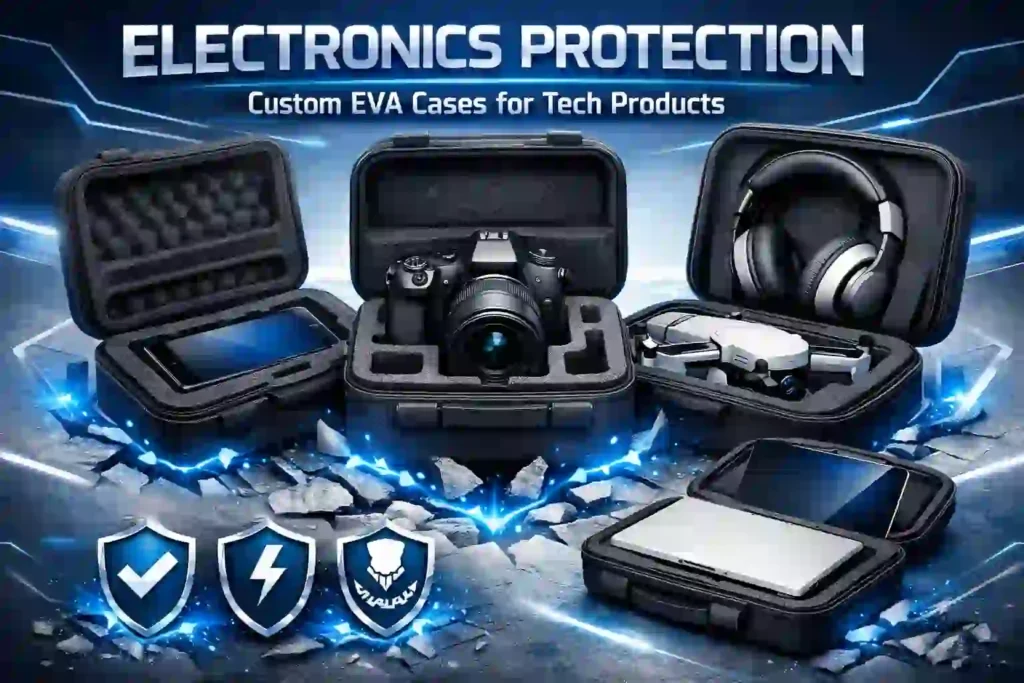
Shock Absorption and Impact Protection
EVA foam’s superior cushioning:
Shock Absorption Properties:
- Compression strength: 0.5-2 MPa
- Energy absorption: 85-95%
- Impact resistance: Drop tested to 2m+
- Vibration dampening: 60-80% reduction
Protection Levels:
- Light duty: 10-15mm EVA
- Medium duty: 20-30mm EVA
- Heavy duty: 40-50mm EVA
Testing Standards:
- Drop tests (1-2m)
- Vibration testing
- Compression testing
- Impact simulation
Static Protection for Sensitive Electronics
Anti-static EVA options:
ESD (Electrostatic Discharge) Protection:
- Conductive EVA foam
- Surface resistance: 10⁴-10⁶ ohms
- Prevents component damage
- Meets ANSI/ESD S20.20
Applications:
- Semiconductor equipment
- Circuit boards
- Computer components
- Sensitive electronics
- Medical devices
Moisture and Environmental Protection
EVA’s barrier properties:
Moisture Resistance:
- Water absorption: <2%
- Vapor barrier options
- Sealed design capability
- Humidity protection
Environmental Protection:
- Temperature stability: -20°C to 60°C
- UV resistance
- Chemical resistance
- Dust protection
- Corrosion prevention
Real-World Case Study: Smartphone Accessories
Project: Protective case for premium wireless earbuds
Requirements:
- Shock protection (1.5m drops)
- Static protection
- Moisture barrier
- Premium appearance
- Custom branding
GADAO Solution:
- Anti-static EVA foam
- 25mm protective layer
- Moisture-sealed design
- Custom color printing
- Branded packaging
Result:
- Zero damage rate in testing
- Professional appearance
- Meets all protection requirements
- Cost-effective solution
Design Optimization for Electronics
Best practices for tech product cases:
Design Considerations:
- Precise fit to product
- Shock absorption zones
- Cable management
- Ventilation (if needed)
- Easy access
Material Selection:
- Anti-static options
- Moisture barriers
- Temperature stability
- Aesthetic appeal
- Sustainability
FAQ
Q: Is EVA safe for electronics? A: Yes! EVA is non-conductive, non-toxic, and widely used for electronics protection.
Q: What’s the difference between regular and anti-static EVA? A: Anti-static EVA has conductive properties to prevent electrostatic discharge damage.
Q: How much shock protection do I need? A: Depends on drop height. Most consumer electronics need 20-30mm EVA for 1-2m protection.
 English
  Korean
  Japanese
  French
  German
  Spanish
  Russian
  Arabic
  Italian
  Portuguese
  Turkish
  Thai
Thai  Vietnamese
  Chinese