
The Complete Guide to Custom EVA Case Design: From Concept to Production
Why Custom EVA Case Design Matters
In today’s competitive market, protecting valuable equipment is more important than ever. Whether you’re manufacturing precision instruments, professional electronics, medical devices, or specialized equipment, the protective case you choose can make the difference between a satisfied customer and a costly warranty claim.
Many companies treat the custom EVA case as an afterthought, only to realize that designing a professional-grade custom EVA case takes time, expertise, and a structured process. A custom EVA case is far more than just a protective container—it’s your brand ambassador. It’s the first thing customers see, even before they interact with your product. The case establishes the perception of your product’s quality before the first use.
Why Choose Custom EVA Cases?
Custom EVA cases offer unmatched advantages for professional equipment protection. Unlike generic storage solutions or off-the-shelf cases, custom EVA cases are engineered specifically for your equipment’s unique needs. EVA foam provides superior shock absorption, moisture protection, and lightweight design that generic cases cannot match. The thermoforming process allows for precision customization that creates perfect-fitting compartments for each component of your equipment.
The Challenge of Custom EVA Case Design
Designing a professional-grade custom EVA case involves multiple phases, specialized expertise, and careful coordination. From initial concept through mass production, the process typically spans 5 to 10 months. Understanding this timeline and process helps you plan your product launch effectively and avoid costly delays.
What You’ll Learn in This Guide
This comprehensive guide walks you through GADAO’s proven 4-step process for designing custom EVA cases. You’ll discover realistic timelines for each phase, the inputs you need to provide, how to bridge the gap between design concept and mass production, and expert tips from our 20+ years of experience creating thousands of professional-grade custom EVA cases for clients worldwide.

Exploration – Defining Your Custom EVA Case Requirements
Every successful custom EVA case project begins with thorough exploration and requirement definition. This phase is critical because it establishes the foundation for all subsequent design decisions.
The Exploration Phase Overview
The Exploration phase kicks off with an in-depth consultation between your team and our design specialists. This isn’t simply about taking measurements—it’s about understanding how users will actually interact with your case in real-world conditions.
Key Questions We Ask During Exploration:
- How will the case be transported? (Vehicle, aircraft, hand-carry?)
- What environmental conditions will it face? (Temperature, humidity, outdoor exposure?)
- How frequently will users access the contents? (Daily, weekly, emergency situations?)
- What level of protection does each component require?
- Are there specific compliance requirements? (Medical, aerospace, military standards?)
- What’s the expected lifespan of the case?
- What’s your budget range for the custom EVA case?
- Are there aesthetic or branding requirements?
Required Inputs for Custom EVA Case Design
To make rapid progress on your custom EVA case design, we typically need three essential inputs:
- Artwork Files and Brand Guidelines
- Company logos and branding elements
- Color specifications and design preferences
- Font requirements and visual identity guidelines
- Any specific aesthetic requirements for your custom EVA case
- 3D CAD Files of Your Equipment
- Detailed 3D models of all components to be protected
- Dimensions and weight specifications
- Material composition and fragility levels
- Cable and connector configurations
- Battery or power system specifications
- Physical Sample of Your Equipment
- The actual device or a representative prototype
- All accessories and components that need protection
- Demonstrates real-world ergonomics and handling requirements
- Allows testing of fit, accessibility, and functionality
Workarounds When Inputs Are Incomplete
In time-critical situations, the custom EVA case design process can begin even if one of these items is temporarily unavailable. While not ideal, experienced design teams have effective workarounds:
- Missing Physical Sample:A 3D-printed mockup or detailed photos can substitute temporarily
- Incomplete CAD Files:Detailed measurements and photos can guide initial design
- Preliminary Branding:Design can proceed with placeholder branding, updated later
However, we strongly recommend providing all three inputs early to avoid redesign cycles and delays.
Timeline for Exploration Phase
Once all required inputs are received, the Exploration phase typically takes 2-3 weeks to complete a comprehensive Product Requirement Document (PRD). This document becomes the blueprint for all subsequent design work.
What’s Included in the PRD:
- Detailed equipment specifications and dimensions
- Protection requirements and durability standards
- User interaction scenarios and handling patterns
- Environmental and compliance requirements
- Aesthetic and branding specifications
- Preliminary material recommendations for your custom EVA case
- Initial cost and timeline estimates
Critical Considerations During Exploration
This phase is the optimal time to identify potential design challenges before any tooling is created. An experienced design team will:
- Identify components that might benefit from relocation or redesign
- Recommend material specifications that balance protection and weight
- Anticipate potential manufacturing challenges
- Suggest design improvements that enhance functionality
- Evaluate compliance requirements early in the process
Pro Tip: Start the custom EVA case design process as early as possible in your product development cycle. Minor changes to your equipment design can have enormous impacts on the case design, ensuring it performs efficiently and effectively while minimizing costs.
Compartmentalization and Organization Strategies
Design Features for Optimal Organization
Organization Benefits for Professionals
Compartmentalization Examples by Industry
Concept – Visualizing Your EVA Case Solution
Once requirements are clearly defined, the project moves to the Concept phase, where design possibilities are explored and refined.
From Requirements to Visual Concepts
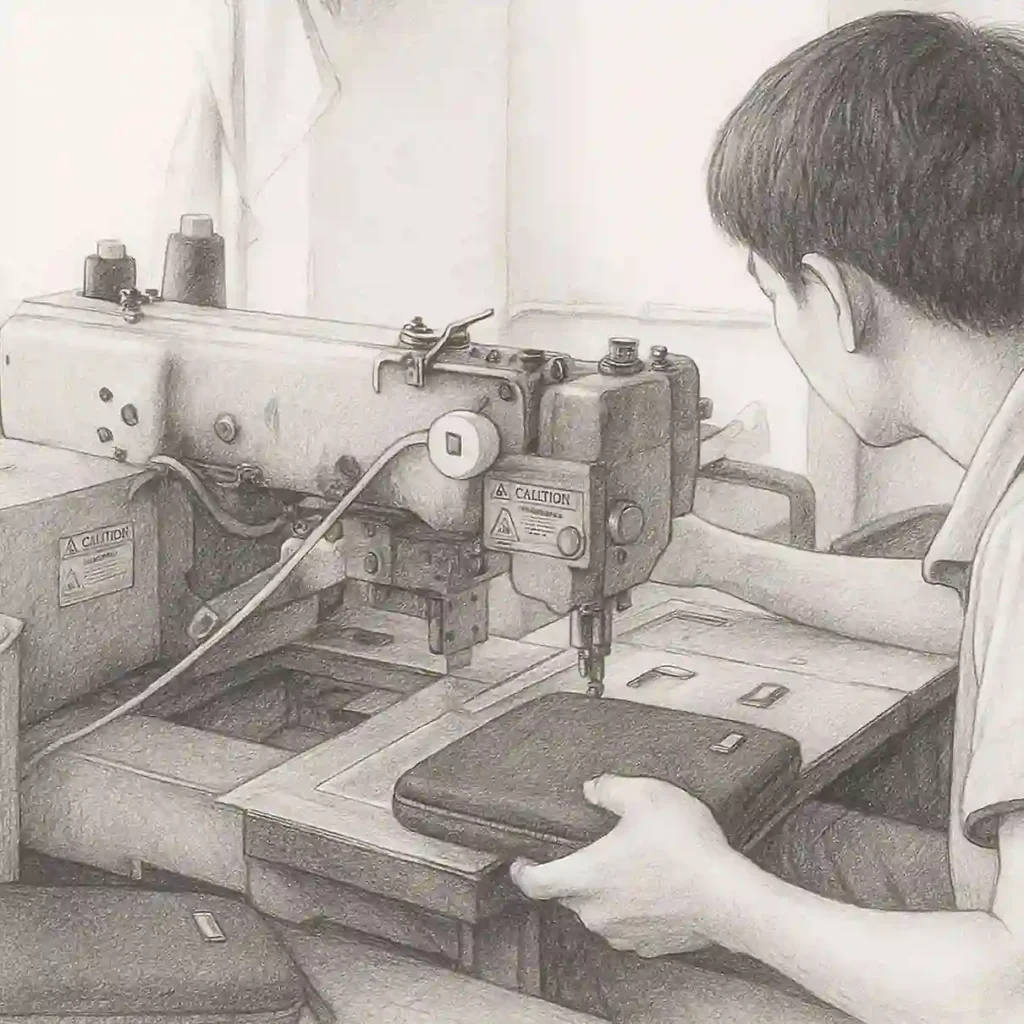
The Concept phase translates detailed requirements into visual design strategies. Your design team presents a formal Preliminary Design Review (PDR) featuring multiple distinct design approaches for your custom EVA case.
The Three-Concept Approach
Professional design teams typically present up to three distinct concepts, each exploring different aspects of your requirements:
Concept A: Lightweight and Portable
- Prioritizes slim profile and minimal weight
- Ideal for professionals who carry equipment frequently
- Uses lightweight EVA foam and compact compartmentalization
- Optimized for hand-carry and travel scenarios
- Best for: Field professionals, photographers, technicians
Concept B: Maximum Protection
- Focuses on maximum impact protection with rugged design
- Features reinforced bumpers and thicker foam padding
- Prioritizes durability over minimal weight
- Designed for harsh environments and intensive use
- Best for: Industrial equipment, sensitive instruments, high-value items
Concept C: Balanced Solution
- Combines portability and protection
- Introduces innovative opening mechanisms or material combinations
- Optimizes for both functionality and durability
- Often includes unique features like modular compartments or quick-access sections
- Best for: Professional operations requiring both protection and accessibility
What the PDR Includes
Each concept presentation for your custom EVA case typically includes:
- 3D Renders:Professional visualizations showing the case from multiple angles
- Internal Layout Options:Detailed compartment configurations and foam insert designs
- User Interaction Diagrams:How users will open, close, and carry the case
- Material Specifications:Recommended EVA foam types, densities, and exterior materials
- Cost Estimates:Preliminary pricing for each concept
- Timeline Implications:How each design approach affects the overall schedule
Selection and Refinement
Rarely does a client select one concept exactly as presented. Typically, feedback combines elements from multiple concepts: “We like the outer shell design of Concept A, with the internal organization of Concept C, and the quick-access feature from Concept B.”
Once a direction is selected, the design team consolidates these preferred features into a single, polished design. This refined design leads to the Critical Design Review (CDR), where all stakeholders approve the direction before moving to detailed engineering.
Timeline for Concept Phase
The refinement process from PDR to CDR typically takes 2-3 weeks after the preferred direction is selected. This timeline allows for:
- Design team refinement and optimization
- Client feedback integration
- Technical feasibility assessment
- Cost and timeline validation
- Preparation for detailed engineering phase
Durability Standards and Testing for Industrial EVA Cases
Industry Durability Standards
EVA Foam Quality Specifications
Specification | GADAO Standard | Industry Minimum |
Shore Hardness | 60-70 A | 50-60 A |
Density | 35-40 kg/m³ | 25-30 kg/m³ |
Tear Resistance | >15 kPa | >10 kPa |
Compression Set | <15% | <20% |
Flame Resistance | Self-extinguishing | Flammable |
Temperature Range | -20°C to 60°C | -10°C to 50°C |
Lifespan | 7-10 years | 3-5 years |
Durability Advantages of EVA Foam Cases
Selecting the Right EVA Case Manufacturer
Key Criteria for Selecting an EVA Case Manufacturer
GADAO: Your Trusted EVA Case Manufacturer
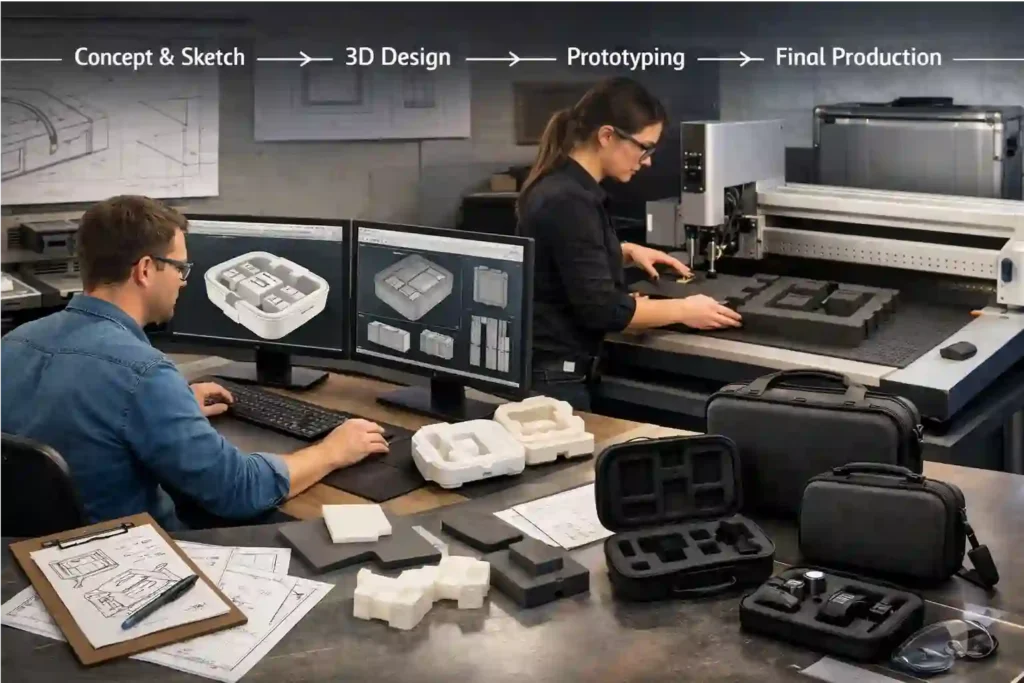
Design & Engineering – Turning Your EVA Case Concept into Reality
This is where the magic and mathematics converge. The Design & Engineering phase transforms your approved concept into a manufacturable custom EVA case through three concurrent tracks.
The Three Concurrent Tracks
Track 1: Detailed Engineering Creating technical blueprints that define every aspect of your custom EVA case:
- Precise component dimensions and tolerances
- Material specifications for EVA foam, exterior shell, and hardware
- Assembly instructions and quality specifications
- Structural analysis and stress testing
- Compliance verification and certification requirements
Track 2: Tooling Production Building the physical molds and tools required for manufacturing:
- CNC machining of foam cutting dies
- Thermoforming molds for exterior shells
- Assembly fixtures and jigs
- Quality control templates and gauges
- Prototype tooling for initial production runs
Track 3: Process Creation Defining exactly how your custom EVA case will be manufactured:
- Assembly sequence and workflow
- Quality control checkpoints at each stage
- Packaging and labeling procedures
- Inventory management protocols
- Shipping and delivery logistics
The Prototype Delivery
The output of this phase is a physical prototype sent directly to you for comprehensive review. This prototype—often called the “First Article”—is your opportunity to:
- Touch and feel the actual case materials
- Test fit with your equipment
- Evaluate ergonomics and handling
- Verify compartment functionality
- Assess aesthetic appeal and branding
- Identify any final adjustments needed
This prototype is critical because it bridges the gap between digital design and physical reality. It allows you to make final refinements before committing to full tooling and mass production.
Timeline for Design & Engineering Phase
This is the longest pre-production phase because it involves creating physical tooling and prototypes. Typically, this phase requires 6-12 weeks, depending on:
- Complexity of the custom EVA casedesign
- Number of components and compartments
- Customization requirements (branding, special features)
- Material sourcing and availability
- Prototype testing and refinement cycles
Factors That Influence Timeline:
- Simple cases with standard materials: 6-8 weeks
- Complex cases with multiple features: 10-12 weeks
- Cases requiring compliance validation: Add 2-4 weeks
- Rush orders with expedited tooling: Add 30-50% to timeline
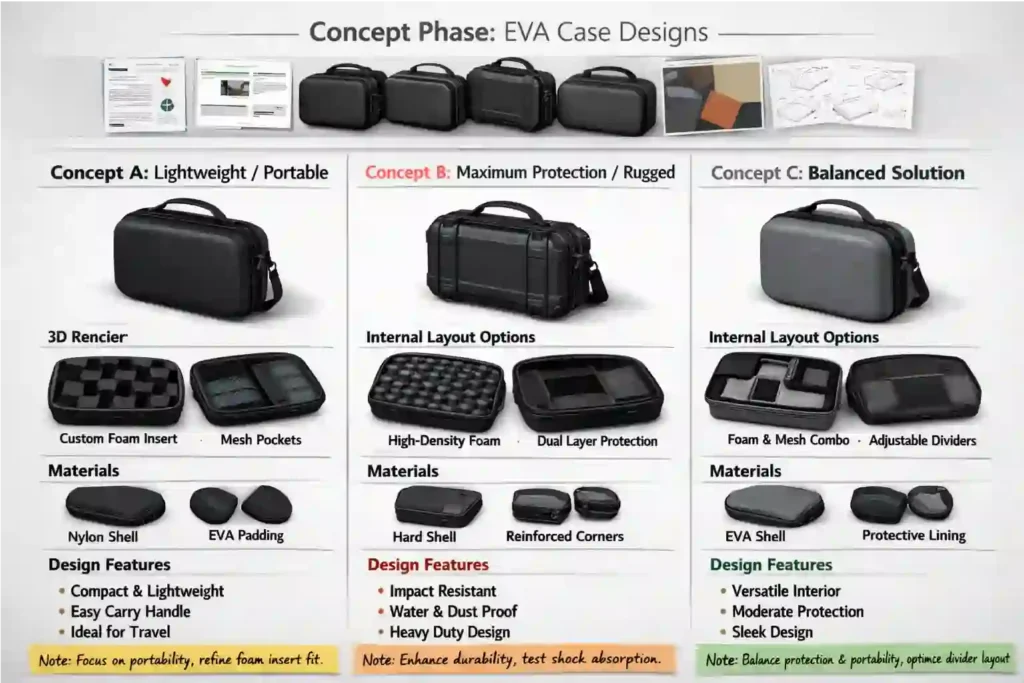
Production – Manufacturing Your Custom EVA Case
Once the prototype is approved, your project transitions to Mass Production. Many assume this is simply a matter of “hitting print,” but custom manufacturing requires a synchronized supply chain and careful coordination.
Pre-Production Preparation
Before a single unit of your custom EVA case is assembled, three critical steps must occur:
- Finalizing Documentation
- Production Files are locked in, preventing any further design changes
- Quality Plan is established, defining exactly how quality is measured
- Specifications include everything from foam density to stitch patterns
- Compliance documentation is finalized and verified
- Manufacturing procedures are documented and approved
- Material Sourcing Manufacturing cannot begin until every component is in the factory warehouse:
- Custom-dyed fabrics and specific EVA foam densities
- Branded zipper pulls and hardware components
- Protective padding and internal compartment materials
- Exterior shell materials and finishes
- Packaging materials and labeling supplies
Long Lead Time Items: Some components must be procured weeks in advance:
- Custom-colored EVA foam (4-6 week lead time)
- Branded hardware and zippers (3-4 week lead time)
- Custom exterior materials (4-8 week lead time)
- Specialized packaging (2-3 week lead time)
- Line Setup & Training
- Assembly line is configured specifically for your custom EVA case
- Custom jigs and fixtures are installed
- Operators are trained on specific assembly procedures
- Quality control processes are established and tested
- First article inspection is performed to verify production readiness
Mass Production Execution
Once the production line is ready, manufacturing proceeds with strict quality control:
- Foam Cutting:EVA foam is precisely cut according to specifications
- Exterior Assembly:Shell components are assembled with adhesives or fasteners
- Interior Installation:Custom foam inserts are installed in compartments
- Hardware Assembly:Zippers, handles, latches, and straps are attached
- Quality Inspection:Each case is inspected against quality standards
- Packaging:Completed cases are packaged for shipment
- Final Verification:Random samples are tested for durability and functionality
Timeline for Production Phase
The production cycle from material procurement to final product delivery spans 8-16 weeks, depending on:
- Complexity of the custom EVA casedesign
- Order quantity and production volume
- Material availability and sourcing challenges
- Quality control requirements and testing
- Packaging and customization requirements
- Shipping and logistics coordination
Production Timeline Breakdown:
- Material procurement: 2-4 weeks
- Line setup and training: 1-2 weeks
- Production run: 3-8 weeks
- Quality control and testing: 1-2 weeks
- Packaging and preparation: 1 week
- Shipping and delivery: 1-2 weeks
Timeline Overview: From Concept to Delivery
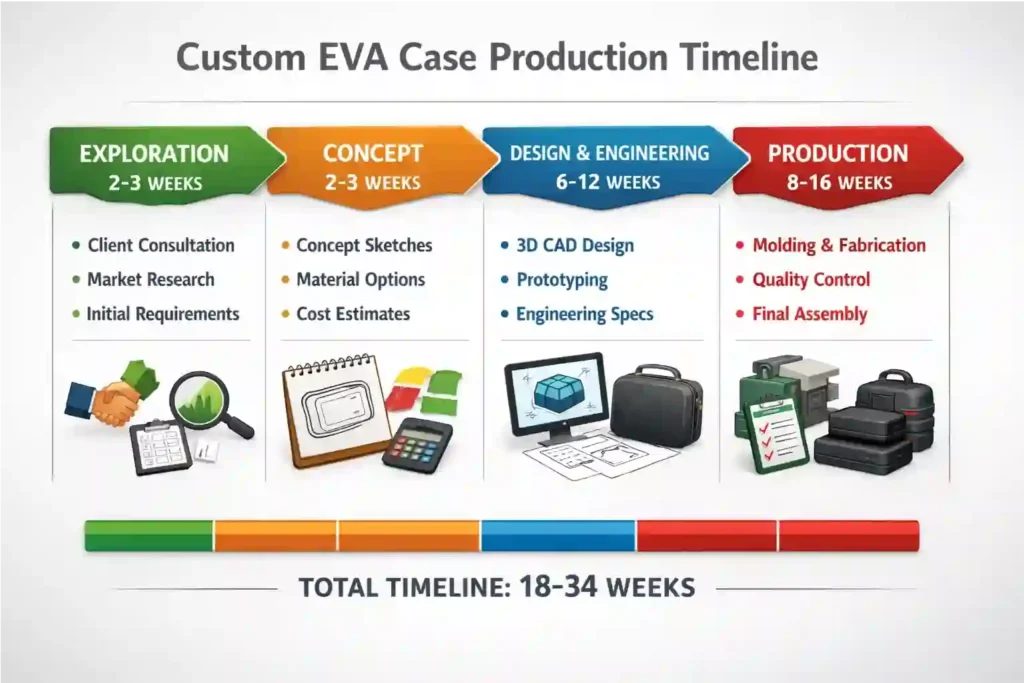
Here’s a comprehensive overview of the typical custom EVA case design and production schedule:
Phase | Duration | Key Milestone | Deliverable |
1. Exploration | 2-3 weeks | Requirements defined | Product Requirement Document (PRD) |
2. Concept | 2-3 weeks | Design direction selected | Preliminary Design Review (PDR) + Critical Design Review (CDR) |
3. Design & Engineering | 6-12 weeks | Prototype approved | Physical prototype + Production-ready files |
4. Production | 8-16 weeks | Manufacturing complete | Final product ready for delivery |
TOTAL | 18-34 weeks | Full project completion | Mass-produced custom EVA cases |
Important Note: This timeline reflects active development time only. It does not account for internal review cycles or approval delays. For example, if your team needs 3 weeks to review the PDR, the final delivery date will shift by 3 weeks. Plan accordingly and establish clear review timelines with your design partner.
Accelerating the Timeline
In certain situations, timelines can be compressed:
- Parallel Processing:Some phases can overlap if requirements are clear early
- Expedited Tooling:Rush tooling services can reduce Design & Engineering by 2-4 weeks
- Pre-approved Concepts:Using proven designs reduces Concept phase time
- Simplified Designs:Fewer components and customizations reduce engineering time
However, rushing the process often results in design compromises or quality issues. We recommend building in buffer time for review cycles and unexpected challenges.
Comparing EVA Cases with Alternative Storage Solutions
Comparison Table: Storage Solutions
Feature | EVA Cases | Plastic Containers | Cardboard Boxes | Metal Cases | Soft Bags |
Impact Protection | Excellent | Fair | Poor | Good | Fair |
Moisture Protection | Excellent | Good | Poor | Excellent | Fair |
Durability | 7-10 years | 2-3 years | 1-2 years | 10+ years | 2-3 years |
Customization | Excellent | Limited | Limited | Limited | Limited |
Cost | Moderate | Low | Very Low | High | Low |
Professional Appearance | Excellent | Fair | Poor | Good | Fair |
Organization | Excellent | Good | Fair | Good | Fair |
Portability | Good | Good | Fair | Poor | Excellent |
Scalability | Excellent | Limited | Limited | Limited | Fair |
Value for Money | Excellent | Fair | Poor | Fair | Fair |
Key Success Factors for Custom EVA Case Design
Based on 20+ years of experience designing thousands of custom EVA cases, we’ve identified critical factors that determine project success:
- Input Matters
Providing complete 3D files and physical samples early prevents delays and redesign cycles:
- Incomplete inputs force the design team to make assumptions
- Assumptions often require correction, adding weeks to the timeline
- Early provision of inputs allows parallel processing and faster completion
Best Practice: Provide all three inputs (artwork, CAD files, physical sample) before the Exploration phase begins.
- Clear Communication
Establishing clear communication channels and decision-making processes prevents misunderstandings:
- Designate a single point of contact for all communications
- Establish clear approval workflows and timelines
- Schedule regular check-ins and status updates
- Document all decisions and design changes
Best Practice: Weekly status calls during design phases, bi-weekly during production.
- Iterative Design Process
You will have multiple major review points to refine the design before any tooling is created:
- PDR (Preliminary Design Review):Initial concepts presented
- CDR (Critical Design Review):Final design approved before engineering
- First Article Review:Physical prototype reviewed before mass production
Best Practice: Provide comprehensive feedback at each review point to avoid surprises later.
- Prototyping is Critical
Always insist on a physical prototype before committing to mass production:
- Prototypes reveal issues that digital designs cannot capture
- Real-world testing identifies functionality problems
- Physical review allows final aesthetic refinements
- Prototype approval provides confidence in final product
Best Practice: Budget time and resources for prototype testing and refinement.
- Plan for Lead Times
Quality manufacturing takes time. Factor in production lead times when planning your device launch:
- Material sourcing requires 2-4 weeks minimum
- Tooling creation requires 6-12 weeks
- Production runs require 8-16 weeks
- Shipping and logistics require 1-2 weeks
Best Practice: Start the custom EVA case design process at least 6 months before your target launch date.
- Budget for Contingencies
Unexpected challenges are normal in custom manufacturing:
- Material availability issues
- Design refinements discovered during prototyping
- Quality control findings during production
- Shipping delays or logistics challenges
Best Practice: Build 2-4 weeks of buffer time into your project schedule.
Real-World Case Study: Professional Equipment Protection
Project Overview: Commercial Drone Fleet Protection
Client Profile: Commercial drone service company operating 12 professional drones worth $500,000+
Challenge: Protect expensive drone fleet during transport and storage while maintaining professional appearance for client presentations
Solution: Custom EVA cases designed specifically for commercial drone equipment
Project Timeline and Results
Phase 1: Exploration (2 weeks)
- Analyzed 12 different drone models and configurations
- Identified protection requirements for cameras, batteries, controllers
- Documented transportation scenarios and environmental conditions
- Created comprehensive PRD with specifications
Phase 2: Concept (2.5 weeks)
- Presented three design concepts with different protection levels
- Client selected balanced approach combining protection and portability
- Refined design with client feedback
Phase 3: Design & Engineering (10 weeks)
- Created detailed engineering drawings for 12 drone-specific cases
- Developed custom foam inserts for each drone model
- Produced prototypes for client testing and approval
- Made final refinements based on prototype feedback
Phase 4: Production (12 weeks)
- Sourced specialized EVA foam and exterior materials
- Set up production line with custom tooling
- Manufactured 12 custom cases with professional branding
- Completed quality testing and packaging
Total Project Duration: 26.5 weeks (6 months)
Measurable Results
Protection Performance:
- 100% of equipment arrived in perfect condition during transport
- Zero damage incidents over 18 months of intensive use
- Cameras and gimbal systems maintained perfect calibration
Operational Efficiency:
- 40% faster site setup and breakdown
- Improved workflow and productivity
- Professional appearance impressed clients
Financial Impact:
- Initial investment: $12,000 (12 cases × $1,000)
- Prevented equipment damage (estimated): $50,000+
- ROI: 417% in first year
- Payback period: 2.9 months
Client Testimonial: “GADAO’s custom EVA cases transformed how we operate. Our clients are impressed by the professional appearance, and we’ve prevented thousands of dollars in equipment damage. These cases are essential to our business. We’ve ordered additional cases for our expanding fleet.”
FAQ: Common Questions About Custom EVA Case Design
Q: How long does the entire custom EVA case design process take?
A: A complete custom project typically runs between 5 to 10 months (18-34 weeks) from the kickoff meeting to delivery, depending on complexity, material availability, and your review timeline. Simple cases with standard materials may take as little as 4-5 months, while complex cases requiring compliance validation may take 12+ months.
Q: Do I really need to send a physical device for custom EVA case design?
A: While a physical sample is ideal, it’s not always required. If unavailable, a high-quality 3D-printed mockup or detailed CAD model can work as a temporary substitute. However, we strongly recommend providing the physical device early in the process to ensure perfect fit and functionality.
Q: What if my equipment design changes during the custom EVA case design process?
A: Minor changes can often be accommodated without significant delays. Major changes may require design revisions and extended timelines. This is why we recommend starting the case design process early in your product development cycle, when equipment design is still flexible.
Q: What compliance requirements do I need to consider for my custom EVA case?
A: Compliance requirements depend on your industry and application. Medical devices may require FDA or EU MDR compliance. Aerospace applications may require AS9100 certification. Environmental applications may require RoHS or REACH compliance. Discuss your specific requirements with your design partner during the Exploration phase.
Q: Can I use an existing design as a starting point for my custom EVA case?
A: Yes! If you have an existing case design you like, we can often adapt it for your specific equipment. This can significantly reduce design time and costs. Provide the existing design files and specifications during the Exploration phase.
Q: How much does a custom EVA case cost?
A: Custom EVA case pricing depends on many factors including size, complexity, materials, customization, and order quantity. Simple cases may start at $300-500 per unit, while complex cases with extensive customization may cost $1,000-3,000+ per unit. Request a quote during the Exploration phase for accurate pricing.
Q: Can I order a small quantity of custom EVA cases?
A: Yes! We work with clients ordering anywhere from 1 to 10,000+ units. Small quantities typically have higher per-unit costs due to tooling expenses, but we can accommodate custom orders of any size.
Q: What happens if I’m not satisfied with the prototype?
A: Prototypes are designed to identify issues before mass production. If refinements are needed, we work with you to make adjustments. Most refinements can be incorporated into the final design without significant delays or cost increases.
Q: How long will my custom EVA case last?
A: High-quality custom EVA cases typically last 10-15 years with normal use. The lifespan depends on usage intensity, environmental conditions, and maintenance. EVA foam is extremely durable and resists compression and degradation over time.
Q: Can I customize the color and branding of my custom EVA case?
A: Absolutely! Custom branding is one of the key advantages of custom EVA cases. We can customize colors, logos, company names, and other branding elements. Provide your artwork files and brand guidelines during the Exploration phase.
Conclusion and Next Steps
Designing a professional-grade custom EVA case is a structured process that requires expertise, planning, and clear communication. By understanding the four phases—Exploration, Concept, Design & Engineering, and Production—you can plan your project timeline effectively and avoid costly delays.
Key Takeaways:
- Start Early:Begin the design process as early as possible in your product development cycle
- Provide Complete Inputs:Supply 3D files, artwork, and physical samples early to prevent delays
- Engage Actively:Participate in design reviews and provide timely feedback
- Plan for Lead Times:Factor in 5-10 months for the complete process
- Invest in Prototyping:Always review and approve a physical prototype before mass production
- Build in Buffer Time:Account for review cycles and unexpected challenges
Ready to Design Your Custom EVA Case?
GADAO brings 20+ years of experience designing thousands of professional-grade custom EVA cases for clients worldwide. Our expert team understands the unique challenges of equipment protection and specializes in creating solutions that balance protection, functionality, and cost-effectiveness.
Next Steps:
- Schedule a Consultation:Contact our design team to discuss your requirements
- Prepare Your Inputs:Gather 3D files, artwork, and physical samples
- Define Your Timeline:Establish your target launch date and work backward
- Request a Quote:Get accurate pricing based on your specific needs
- Start the Exploration Phase:Begin the journey toward your perfect custom EVA case
 German
  English
  Korean
  Japanese
  French
  Spanish
  Russian
  Arabic
  Italian
  Portuguese
  Turkish
  Thai
Thai  Vietnamese
  Chinese