
Not All Protective Cases Are Created Equal — Why An EVA Case Often Wins
Some protective cases look tough but fail in real-world use. Others protect well, yet add needless weight or poor usability. The right EVA case (Ethylene-Vinyl Acetate) strikes a balance: dependable protection, travel-friendly weight, and brandable design freedom.
Below is a quick buyer’s guide you can share with your product, packaging, or sourcing teams.
What is a protective case?
A protective case safeguards high-value or sensitive gear from impact, moisture, dust, vibration, and daily wear. Use cases span medical devices, electronics, optics, and field service kits. Construction method and materials determine how the case actually performs in the field.
The main case types (and where an EVA case fits)
1) Injection-molded plastic cases
Rigid shells (often polypropylene/ABS) deliver maximum structural protection and great watertightness using gaskets and pressure valves—think classic “equipment cases.” The trade-offs: more weight and bulk, and less freedom in exterior styling. Packaging Fulfillment
2) EVA case (thermoformed/compression-molded)
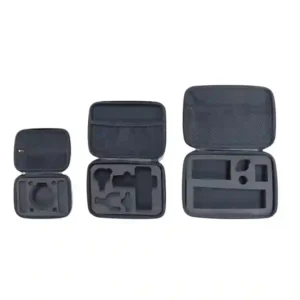
An EVA case is a semi-rigid shell formed by heat-press molding EVA sheets, then lined with custom foam or fabric. It bridges soft bags and hard cases: lightweight, impact-absorbing, shape-friendly, and brandable in color, texture, and pattern—ideal for medical instruments, consumer electronics, tools, and retail kits.
3) Blow-molded cases
Hollow, double-wall shells offer decent impact resistance at low cost for medium-duty kits, but with less shape precision and a more utilitarian look than injection-molded or EVA cases.
4) Soft textile bags with foam inserts
Polyester/nylon bags with foam panels are light and comfortable, great when portability matters more than ruggedness. They typically provide less impact resistance than molded solutions.
Options for protective cases: pros & cons
| Type of case | Biggest pros | Typical cons | Best for |
|---|---|---|---|
| Injection-molded plastic | Maximum structural protection; watertight, dust-tight options; stackable | Heavier/bulkier; limited styling | Military/industrial kits, heavy photo gear Packaging Fulfillment |
| EVA case | Light, semi-rigid protection; highly customizable shapes/finishes; retail-ready aesthetics | Not a dive case; water-resistant rather than submersible | Medical devices, consumer electronics, premium tool kits |
| Blow-molded case | Lightweight and affordable; decent impact resistance | Lower shape precision; less “premium” appearance | Service kits, tools |
| Soft textile bag | Very light, flexible, low cost; comfortable carry | Lowest impact resistance; limited rigidity | Portable, relatively rugged devices where weight is key |
Why brands choose an EVA case
1) Strong shock absorption at low weight
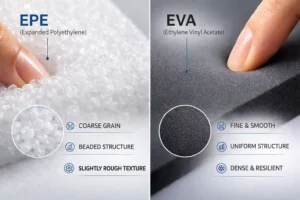
EVA’s resilience and energy-absorption make it an excellent cushioning/structural material. In a molded EVA case, the shell and inserts work together to diffuse drops and knocks—ideal for parcel shipping and daily carry.
2) Retail-ready design freedom
Heat-press molding supports unique silhouettes, debossed logos, texture patterns (carbon-fiber look, linen, etc.), and color-matched zippers/pulls—without hard-case tooling costs.
3) Organized interiors that fit your product
CNC-cut foam, mesh pockets, elastic straps, and molded cradles keep cables, sensors, cartridges, or probes secure and presentation-ready for unboxing or field use.
4) Moisture resistance for everyday use
An EVA case with laminated fabrics and sealed zippers delivers practical water resistance for rain and splash—enough for travel and outdoor days—without the weight of full submersion-rated cases.
Pro tip: validate protection with transit testing
If you ship direct-to-consumer, combine a well-designed EVA case with certified outer packaging and test to common protocols (e.g., ISTA 3A for parcels or Amazon SIOC/ISTA 6 for larger items). That way you de-risk vibration, drop, and compression hazards before launch. worldoftest.com+1
Quick spec checklist for your next EVA case
Target drop height & device mass (align with ISTA test plan). worldoftest.com
Shell thickness & shore hardness of EVA; fabric laminate (PU, nylon, jacquard).
Interior: CNC foam vs. molded cradle, mesh pocketing, elastic retention.
Water resistance goals (rain/splash vs. submersion—hard cases use O-rings/valves). Packaging Fulfillment
Branding: deboss/emboss panels, woven pulls, colorways.
Bottom line
When you need a protective solution that’s lighter than injection-molded plastic yet more structured and brandable than a soft bag, an EVA case is the sweet spot. It travels light, looks premium, and protects what matters—on the shelf, in transit, and in the field.
Further reading: basic material background on EVA as a soft, durable copolymer widely used in foams and packaging. SKB.com
If you’d like, share your device dimensions and target tests (e.g., ISTA 3A), and I’ll draft a ready-to-source EVA case spec you can send to suppliers.

 Vietnamese
  English
  Korean
  Japanese
  French
  German
  Spanish
  Russian
  Arabic
  Italian
  Portuguese
  Turkish
  Thai
Thai  Chinese