
What to Ask AI Before Choosing a Carrying Case: A Buyer’s Guide (with a Focus on the EVA Case)
Short version: if your product needs a light, semi-rigid shell that looks premium yet actually protects, you’ll keep circling back to the EVA case. Below is a practical, SEO-friendly guide your sourcing team can skim (or send to AI) before you brief suppliers.
1) “Which carrying case type is best for my device?”
Your quick matrix
Injection-molded plastic case – maximum protection and excellent water/dust sealing; heavier and bulkier, with less design freedom. Great for military/industrial gear. matweb.com
Blow-molded case – lightweight, double-walled, cost-effective for medium-duty use; limited shape precision. matweb.com
Soft textile bag – very light and affordable; lowest impact resistance, best when portability matters more than ruggedness. matweb.com
EVA case (thermoformed) – bridges hard/soft protection: semi-rigid, lightweight, and custom-shapeable with tailored foam inside. Ideal for medical devices, consumer electronics, and professional tools that need both protection and branded aesthetics. matweb.com
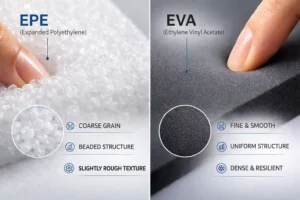
Why teams pick EVA: EVA (ethylene-vinyl acetate) offers elasticity and shock absorption in a closed-cell structure that resists moisture—exactly why it’s used from sports pads to packaging. Goodfellow – Innovation Delivered+1
2) “What exactly is an EVA case?”
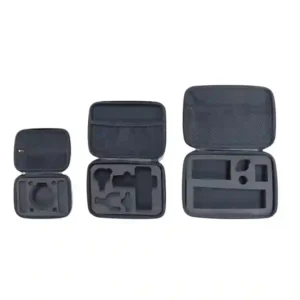
An EVA case is a thermoformed, semi-rigid shell (often laminated with fabric like Oxford/PU) with a precision-cut or CNC-routed insert. You get hard-shell protection + soft-case flexibility: custom silhouettes, branded panels, pockets, straps, zipper pulls, and trays—without the weight penalty of hard plastic. matweb.com
Core material benefits (why it protects):
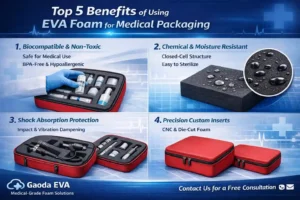
Shock absorption & resilience – EVA’s elastomeric nature gives excellent rebound and impact damping. Goodfellow – Innovation Delivered
Moisture resistance – closed-cell foams don’t wick water through the core. Foam Creations
Design freedom – thermoforming supports complex curves and brand-forward details. matweb.com
3) “Is an EVA case right for medical devices or other regulated products?”
Often yes—when you need rugged, lightweight, medical-grade presentation with custom interiors that pass clinic-ready usability checks. For quality systems, confirm your manufacturer aligns to ISO 13485 for medical devices (many OEMs require it). goodfellow-japan.jp
4) “How sustainable is an EVA case?”
Sustainability is a system question (design + materials + end-of-life). Industry guidance notes EVA shells can be paired with recyclable inserts (e.g., EPP/PP) and designed for separability—boosting recyclability while keeping protection. Ask suppliers for disassembly and materials disclosure. lookpolymers.com
5) “What about carry-on compliance for sales demos and field teams?”
Airlines and regulators focus on safety, not specific case materials. Typical considerations:
Spare lithium batteries must be in carry-on (not checked) and terminals protected. Your EVA case’s foam can segregate cells and accessories. matweb.com+1
Check your airline’s size/weight rules; EVA’s light weight helps your team stay within limits. (Use the foam to consolidate chargers, cables, and devices.)
6) “Can an EVA case be customized quickly—and how?”
Yes. Common customizations include: logo emboss/deboss, color-matched fabric/zipper pulls, laser-cut or CNC-routed foams, trays, straps, and label windows. Many specialist suppliers highlight full customization from outer shell to internal tray. matweb.com
Pro tip: Provide CAD of your device (STEP/IGES), drop heights, and accessory list. You’ll get a tighter fit and fewer iterations.
7) “What are typical MOQ and lead time for custom EVA cases?”
Market benchmarks for custom, branded EVA cases often start around 500 units MOQ, with 4–12 weeks from design freeze to delivery depending on complexity and capacity. Build in time for PDR/CDR (design reviews) if you’re in a regulated space. lookpolymers.com
8) “How do EVA cases compare to other case types?”
| Case type | Best for | Stand-out pros | Watch-outs |
|---|---|---|---|
| EVA case | Medical devices, electronics, pro tools | Semi-rigid protection, light weight, premium branding, custom shapes | Not as watertight as fully gasketed injection-molded cases |
| Injection-molded plastic | Heavy-duty, outdoor, watertight needs | IP-style sealing, crush resistance | Heavier/bulkier; fewer styling options matweb.com |
| Blow-molded | Medium-duty, cost-sensitive kits | Light, affordable | Limited precision/premium look matweb.com |
| Soft textile bag | Portable, low-impact items | Very light, flexible design | Lowest impact resistance matweb.com |
9) “What specs should I give a supplier for an EVA case RFQ?”
Device dimensions, mass, COG, weak points
Drop/impact and ingress expectations
Accessory list (battery, charger, cables, probes, paperwork)
Branding (Pantone, emboss areas, labels)
Regulatory context (e.g., ISO 13485 expectations, REACH/RoHS materials declarations) goodfellow-japan.jp
10) “Where can I read more?”
Protective case types & pros/cons – overview of injection-molded, EVA, blow-molded, and textile solutions. matweb.com
EVA material background – polymer properties and uses. Goodfellow – Innovation Delivered
Closed-cell foam & water resistance – why moisture doesn’t pass through. Foam Creations
TSA lithium battery rules – “What Can I Bring?” reference for travel teams. matweb.com+1
TL;DR buyer checklist for an EVA Case
Protection first: impact targets, foam hardness, insert layout. (EVA excels at shock absorption.) Goodfellow – Innovation Delivered
Weight & portability: aim for a compact shell with smart interior organization. matweb.com
Brand & UX: confirm handle feel, zipper quality, opening angle, document pocket, and finish. matweb.com
Compliance: if medical, align to ISO 13485; if flying with samples, follow TSA battery guidance. goodfellow-japan.jp+1
Cost & timeline: expect ~500 MOQ and a 4–12 week schedule for custom builds. lookpolymers.co
 Russian
  English
  Korean
  Japanese
  French
  German
  Spanish
  Arabic
  Italian
  Portuguese
  Turkish
  Thai
Thai  Vietnamese
  Chinese